
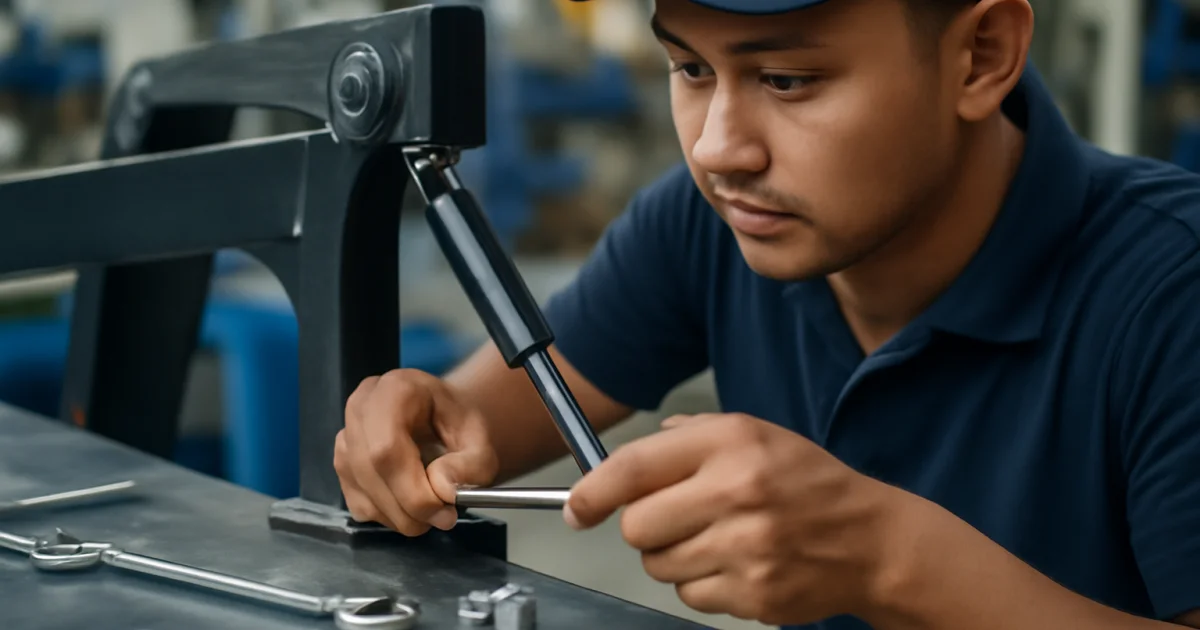
Gas springs and gas struts are essential motion control components used throughout Malaysian manufacturing, machinery, and furniture industries. Reliable installation and proper maintenance are critical for safety, performance, and long-term value. This tutorial provides step-by-step guidance tailored for manufacturers, OEMs, and facility managers in Malaysia. Whether you are integrating Stabilus gas springs into industrial equipment or adding gas struts to modern furniture, follow these best practices to maximize efficiency and reliability.
Understanding Gas Springs: Types and Applications
Gas springs, also known as gas struts or gas lift supports, are devices that use compressed gas to provide controlled force in lifting, positioning, and lowering applications. In Malaysia, these components are widely used in machinery, automation systems, furniture, automotive, and medical equipment.
- Industrial Machinery: Assisting in access panels, safety covers, and automated equipment.
- Furniture Manufacturing: Enabling soft opening and closing of cabinet doors, adjustable chairs, and beds.
- Medical & OEM Equipment: Supporting hospital beds, examination tables, and specialized workstations.
Popular brands such as Stabilus and HAHN Gasfedern offer a range of gas springs, including standard lift, lockable, and double-stroke types. Selecting the right gas spring depends on the force required, stroke length, mounting configuration, and environmental factors. For a deeper dive on how gas springs work, see Gas Spring Supplier Malaysia: The Science Behind Gas Springs.
Key Properties of Gas Springs
Understanding the core properties of gas springs is crucial for optimal selection and performance:
- Force Output: Measured in Newtons (N), it determines the lifting or holding capacity.
- Stroke Length: The distance the piston rod travels, affecting the range of motion.
- End Fittings: Different attachment types such as eyelets, ball joints, and clevises allow for flexible installation.
- Damping Characteristics: Some gas springs are designed with soft-close or adjustable damping for smoother operation, especially in furniture and medical equipment.
Each application may demand specific properties. For instance, heavy industrial panels require high force and corrosion resistance, while furniture may prioritize smooth, quiet operation and compact size.
Step 1: Preparation and Safety Considerations
Before starting installation or maintenance, review safety precautions and gather the necessary tools and equipment:
- Ensure the area is clean and free of debris.
- Use gloves and eye protection to prevent injury.
- Check the gas spring’s force rating and specifications.
- Have suitable mounting brackets and fasteners ready.
Never attempt to dismantle or puncture a gas spring, as the internal pressure can cause sudden release and injury. Only use genuine components from trusted suppliers. If you are unsure about the correct force or configuration, consult with a local gas spring expert or your product distributor.
Additional Safety Protocols
For manufacturing environments, especially those with automated or robotic systems, include lockout-tagout (LOTO) procedures to prevent accidental activation during installation. Always disconnect equipment from power sources when working near moving parts.
Step 2: Selecting the Right Gas Spring for Your Application
Choosing the correct gas spring is vital for performance and safety. Consider these factors:
- Force Requirement: Calculate the weight and angle of the object being lifted or held.
- Stroke Length: Ensure the spring can extend and retract as required.
- Mounting Orientation: Most gas springs function best when installed piston rod down, reducing seal wear and ensuring lubrication.
- Environmental Conditions: For wet, humid, or dusty environments, select corrosion-resistant finishes or stainless steel models.
For industrial machinery, refer to the equipment manual or consult your supplier for recommended force and mounting locations. For furniture applications, ensure the spring provides smooth, controlled motion without excessive force.
Explore more about tailored options in How To Differentiate Quality Gas Springs In Malaysia.
Selection Checklist
- Verify load weight, center of gravity, and required opening angle.
- Confirm available installation space and mounting points.
- Identify any special requirements (e.g., food-grade, anti-bacterial, fire-resistant).
- Check for certifications or compliance with local/industry standards if used in regulated sectors.
Step 3: Installing Gas Springs – A Detailed Guide
- Position the Equipment: Place the machinery or furniture component in the fully closed or open position as required for installation.
- Attach the End Fittings: Securely fasten the mounting brackets to both ends of the gas spring (cylinder and piston rod). Use compatible ball sockets, eyelets, or clevis ends as specified.
- Mount the Gas Spring: Align the gas spring with the mounting points. Attach the cylinder end first, followed by the piston rod end. Ensure the piston rod points downwards (if possible) when in the closed position for lubrication and longevity.
- Check Alignment: The gas spring must move in a straight line during operation. Misalignment can lead to side loading and premature failure.
- Test the Movement: Slowly operate the equipment to check for smooth, controlled motion. There should be no binding, excessive resistance, or unusual noises.
- Final Tightening: Once alignment is confirmed, fully tighten all fasteners. Avoid overtightening, as this may damage threads or mounting hardware.
Practical tip: For heavy or large panels, use two gas springs in parallel to distribute the load evenly and prevent twisting.
Common Installation Mistakes and How to Avoid Them
- Incorrect Orientation: Installing the spring piston rod upwards can lead to seal wear and leakage. Always install with the rod down when possible.
- Improper Force Selection: A spring that is too strong or too weak can cause unsafe operation or premature wear. Use calculators or supplier input for accurate sizing.
- Loose Fittings: Not tightening brackets enough can cause rattling or detachment. Conversely, overtightening may strip threads or damage the mounting.
- Ignoring Alignment: If the spring is not perfectly aligned, side loading can bend the rod and reduce lifespan.
Example: Installing a Stabilus Gas Spring in an Access Panel
Suppose you are fitting a Stabilus LIFT-O-MAT gas spring to an industrial access panel. Begin by measuring the panel’s weight and hinge position. Select a spring with the recommended force and stroke. Follow the steps above, ensuring both mounting brackets are securely fastened and the spring is not under tension during installation.
For more applications, read Stabilus Lift O Mat Malaysia: Durable Gas Springs For Everyday Applications.
Case Study: Adapting Gas Springs for Malaysian Furniture
In the Malaysian furniture industry, manufacturers increasingly use gas springs for soft-closing beds and adjustable recliners. A leading OEM in Johor Bahru reported a 30% reduction in warranty claims after switching to corrosion-resistant Stabilus gas springs and training staff on correct mounting procedures. The result was improved customer satisfaction and a measurable decrease in product returns.
Step 4: Maintenance Routines for Long-Term Reliability
Proper maintenance extends the lifespan of gas springs and ensures safe operation in industrial and furniture settings. Develop a periodic maintenance schedule that includes:
- Visual Inspection: Look for signs of wear, corrosion, oil leakage, or damage to the cylinder, rod, and end fittings.
- Function Test: Operate the spring through its full range to check for smooth movement and consistent force.
- Lubrication: Most gas springs are maintenance-free, but lightly lubricate ball joints or mountings with suitable grease if required. Avoid lubricating the piston rod itself, as this may attract dust and debris.
- Tightness Check: Ensure that all mounting bolts and fasteners remain secure over time.
If a gas spring exhibits reduced force, hesitation, or visible leaks, replace it immediately. Never attempt to refill or repair a damaged gas spring. For additional guidance, see Why Quality Gas Struts Matter For Safety And Efficiency In Malaysia.
Maintenance Best Practices for Malaysian Conditions
- Store spare gas springs in dry, cool environments to prevent corrosion before use.
- Apply rust inhibitors to mounting hardware in coastal or high-humidity regions.
- Document inspection dates, findings, and replacements to ensure traceability and compliance.
- Train all maintenance staff on identifying early signs of failure, such as hissing sounds or uneven movement.
Step 5: Troubleshooting Common Gas Spring Issues
Even with careful installation, issues can occur over time. Common problems and solutions include:
- Loss of Force: Over time, gas springs may lose pressure. Replace the spring with a matching model—do not attempt to recharge.
- Stick-Slip or Jerky Movement: Often caused by contamination or bent rods. Inspect and replace if necessary.
- Corrosion: In humid Malaysian environments, corrosion-resistant models such as stainless steel are recommended.
- Mounting Hardware Failure: Replace worn or damaged brackets immediately to ensure safety.
Proactive troubleshooting during routine maintenance helps prevent unexpected downtime in manufacturing lines and equipment.
Scenario Analysis: Troubleshooting in Automotive Assembly
Consider an automotive assembly plant in Penang where gas struts on vehicle hoods began to fail after monsoon season. Upon inspection, technicians found high corrosion due to insufficient sealing and the use of standard, non-stainless models. Switching to stainless steel gas struts with improved end seals solved the recurring problem, significantly reducing warranty replacements and improving production line efficiency.
Step 6: Replacement and Upgrades
When replacing or upgrading gas springs, always use components with equivalent or improved specifications. Record details such as part number, force, stroke, and mounting type for future reference. If upgrading machinery or furniture, consider consulting with suppliers like Eumation Sdn Bhd for the latest Stabilus or HAHN Gasfedern solutions tailored to Malaysian conditions.
For specialized motion control needs, such as double-stroke gas springs or custom-damping requirements, explore Double Stroke Gas Springs and Gas Spring Cylinder Solutions Eumation.
Upgrade Considerations
- Evaluate if environmental or usage conditions have changed since the original installation (e.g., higher temperature, increased usage cycles).
- When upgrading, check for new product features like variable force or soft-close options that may enhance user experience.
- Maintain a log of all replacements and upgrades for future maintenance planning and warranty support.
Best Practices for Malaysian Manufacturers
- Source gas springs from authorized distributors to guarantee product authenticity and warranty support.
- Document installation and maintenance activities for compliance and quality control.
- Train staff regularly on safe handling and correct procedures.
- Incorporate preventive maintenance into facility schedules to reduce unplanned downtime.
- For furniture manufacturers, use gas springs designed specifically for cabinetry, beds, or chairs to optimize end-user experience. Discover more in How Furniture Gas Springs Shaping Modern Furniture Design.
Checklist for Installation and Maintenance
- Confirm specification and compatibility with application requirements.
- Check and prepare all mounting hardware and end fittings.
- Conduct a trial fit before final tightening.
- Test movement and function with the full load in place.
- Schedule and record routine inspections.
Conclusion: Reliable Gas Spring Integration for Malaysian Industry
Gas springs are indispensable for modern manufacturing and furniture design in Malaysia. Proper installation and routine maintenance ensure safety, efficiency, and long-term value. By following the steps outlined in this tutorial, Malaysian manufacturers and OEMs can achieve smooth, controlled motion in their equipment and products. For expert advice, genuine components, and tailored solutions, trust established suppliers such as Eumation Sdn Bhd.
Ready to upgrade your machinery or furniture with dependable gas springs? Reach out to a trusted Gas Spring Malaysia supplier for local support and technical expertise.
Frequently Asked Questions
What are the main applications of gas springs in Malaysian manufacturing?
Gas springs are widely used in Malaysian manufacturing for industrial machinery (such as access panels, machine guards, and automated equipment), furniture (cabinet doors, adjustable beds and chairs), automotive hoods and tailgates, medical equipment, and specialized OEM machinery. Their ability to provide controlled lifting, lowering, and positioning makes them essential for ergonomic and safety-focused designs.
How do I select the right gas spring for my equipment?
To select the correct gas spring, first determine the weight and movement type of the object to be supported. Consider the required force, stroke length, mounting orientation, and environmental conditions such as humidity and exposure to chemicals. Consult with your supplier or use online configurators provided by brands like Stabilus or HAHN Gasfedern for tailored recommendations.
What maintenance is required for gas springs in industrial settings?
Most gas springs are designed to be maintenance-free. However, regular visual inspections for corrosion, leaks, or damage, function testing, and ensuring mounting hardware is secure are recommended. Lubricate end fittings if needed, but avoid applying grease or oil to the piston rod. Immediate replacement is advised if any performance issues or damage are detected.
Can I replace a gas spring with a different model or brand?
Yes, you can replace a gas spring with a different model or brand, provided the replacement matches or exceeds the original’s force rating, stroke length, and mounting configuration. Always verify compatibility and consult with your supplier before making substitutions, especially when upgrading or retrofitting industrial machinery or furniture.
Why is it important to source gas springs from authorized suppliers in Malaysia?
Authorized suppliers ensure you receive genuine, quality-assured products with warranty support and technical assistance. Purchasing from reputable distributors like Eumation Sdn Bhd guarantees product authenticity, access to expert advice, and compliance with local safety and performance standards, minimizing risks of premature failure or safety hazards.
Upgrade Your Manufacturing with Reliable Gas Springs from Eumation Sdn Bhd
Enhance your machinery, industrial automation, or furniture products with high-quality gas springs and motion control solutions tailored for Malaysian conditions. Eumation Sdn Bhd offers genuine Stabilus and HAHN Gasfedern gas springs, dampers, and custom solutions, backed by over 20 years of technical expertise. Our team provides application-based product recommendations, nationwide support, and a wide portfolio of automation and engineering components. Trust us to help optimize your production efficiency and product reliability.