
When you wave your hands under a modern hand dryer and it activates instantly, adjusts airspeed, and shuts off the moment you pull away, you are experiencing a motion control system in action. Most people never think twice about it but beneath that sleek casing lies a carefully engineered sequence of detection, decision-making, and mechanical response.
Motion control is the discipline of managing the movement, position, speed, and force of mechanical components using sensors, actuators, and control logic. It is foundational to everything from industrial robotics and CNC machinery to consumer appliances like hand dryers. In Malaysia, where commercial development is booming and hygiene standards in public facilities are rising, understanding this technology helps facility managers, engineers, and procurement teams make smarter decisions.
In this article, you will learn how motion control systems work, how they are applied specifically in hand dryer engineering, and how components like precision mechanical actuators form the backbone of reliable, high-performance devices.
How a Motion Control System Works
A motion control system is an integrated framework of hardware and software that governs how a machine or mechanism moves. Rather than relying on simple on/off switches, these systems use feedback loops — continuously reading conditions and adjusting output to achieve a desired result with precision.
At its most fundamental level, every motion control system consists of four core elements:
- Sensor or input device detects the triggering condition (presence, position, pressure, or speed)
- Controller the processing unit that receives sensor data and determines the appropriate response
- Actuator the component that carries out the physical action (a motor, solenoid, or mechanical spring)
- Feedback mechanism monitors the output and reports back to the controller for continuous adjustment
This closed-loop architecture is what separates a true motion control system from simple mechanical switching. The system doesn’t just react — it monitors, adjusts, and optimises in real time.
Open-Loop vs Closed-Loop Motion Control
It’s worth distinguishing between the two main system types:
Open-loop systems execute a pre-set command without verifying the result. A basic timer-controlled dryer that runs for 30 seconds regardless of whether hands are present is a classic example. These systems are simple and cost-effective but offer no adaptability.
Closed-loop systems use sensor feedback to continuously verify and correct performance. A hand dryer that detects hand presence, ramps up airspeed as hands move closer to the nozzle, and shuts off precisely when hands are withdrawn that’s closed-loop motion control delivering intelligent, responsive behaviour.
The shift from open to closed-loop design is one of the most significant trends in commercial appliance engineering today, and hand dryers sit at an interesting intersection of this evolution.
Motion Control Systems in Modern Hand Dryers
The hand dryer is a deceptively sophisticated device. What appears to be a simple air-blowing unit is, in reality, a system that must manage airflow velocity, motor speed, heat output, and activation timing all in response to real-time environmental input.
Sensor-Driven Activation
The entry point for motion control in any hand dryer is the presence sensor. Most modern units use infrared (IR) sensors positioned at the opening of the unit. When hands break the IR beam or interrupt the reflected signal, the controller receives an activation signal and initiates the motor sequence.
Higher-end models use proximity sensors with variable sensitivity zones. These can differentiate between a hand at optimal drying distance and incidental objects passing nearby, reducing false activations and improving energy efficiency a meaningful consideration in high-traffic Malaysian facilities where running costs accumulate quickly.
Motor Speed and Airflow Management
Once activated, the controller must manage the brushless DC motor that drives the fan or impeller. This is where motion control becomes genuinely complex. The motor doesn’t simply switch to full speed it ramps up through a controlled acceleration curve to prevent mechanical stress, reduce noise, and extend motor lifespan.
Variable frequency drives (VFDs) or pulse-width modulation (PWM) controllers regulate how power is delivered to the motor at each moment. The result is a motor that reaches optimal airspeed within a fraction of a second, sustains it efficiently, and decelerates smoothly when the sensor clears.
In commercial environments, this kind of controlled actuation directly translates to lower maintenance frequency and longer product life outcomes that procurement managers in Malaysian hospitals, airports, and corporate buildings actively seek.
Thermal Management and Safety Control
Advanced hand dryers with heating elements add another control layer. The motion control system must coordinate airflow speed with heating element output to ensure the air temperature at the nozzle stays within safe and effective parameters. A sudden surge of high-speed airflow without corresponding heat adjustment would produce uncomfortably cool air; too much heat at low airspeed risks surface burn on the nozzle or user discomfort.
Thermal sensors embedded near the heating element feed real-time temperature data back to the controller, which adjusts both the element intensity and the motor speed to maintain the target output temperature a textbook closed-loop motion control application.
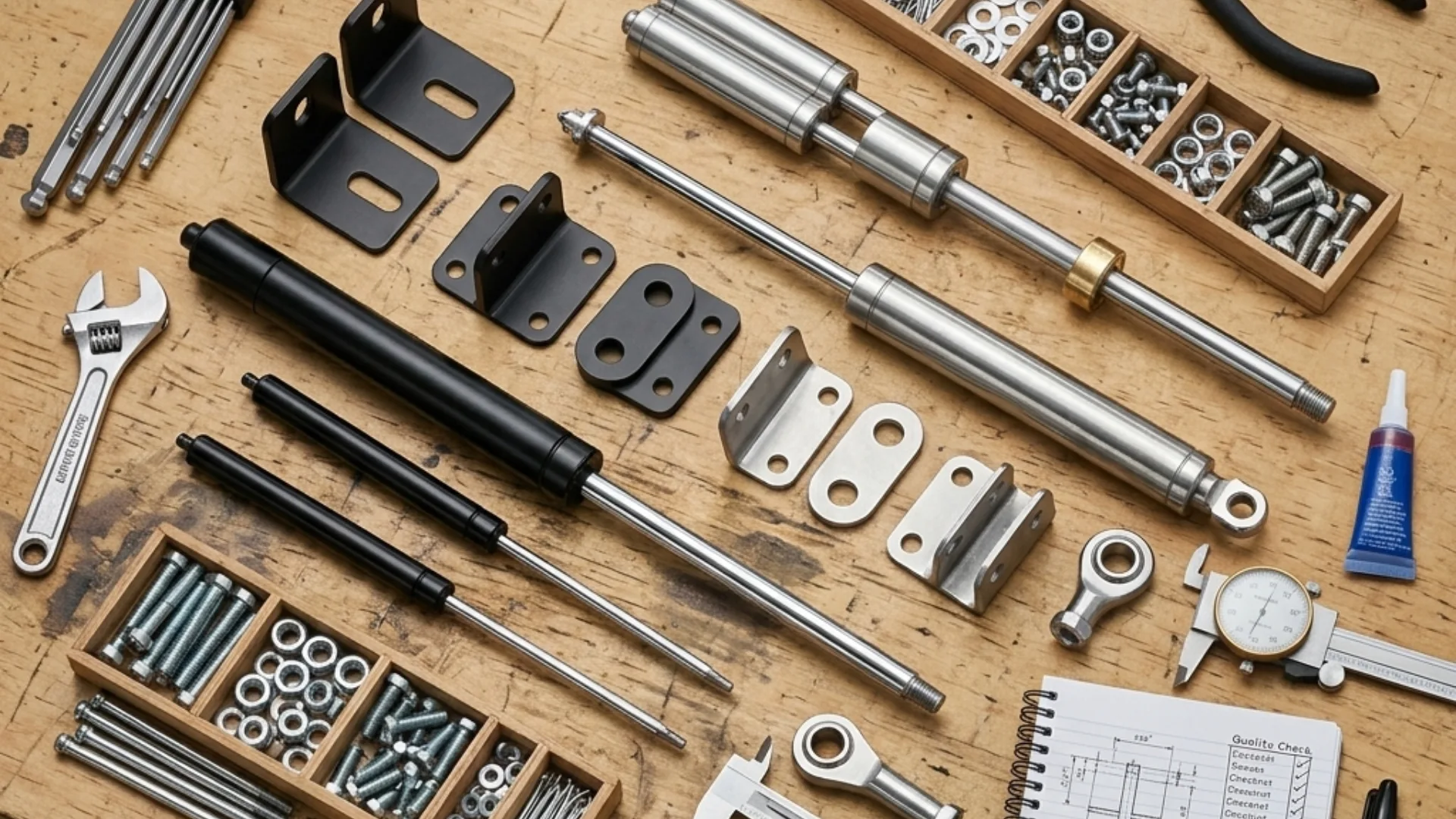
For facilities engineers looking deeper into how precision mechanical components enable these kinds of controlled, repeatable motions, the Hahn gas spring product range from Eumation offers excellent reference for understanding controlled force and displacement in mechanical systems.
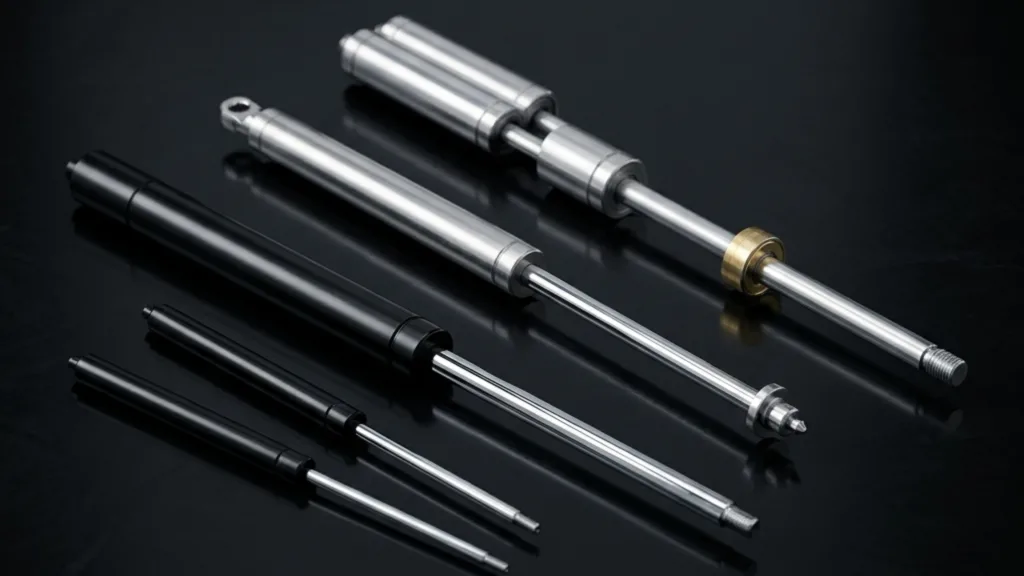
Gas Springs as Passive Actuators
While sensors and motors handle the dynamic control layer, the physical enclosures and mounting systems of hand dryers often rely on passive but equally important mechanical components including gas springs.
Gas springs are pressure-sealed cylinders filled with nitrogen that provide controlled, consistent force across a range of positions. In the context of hand dryer and washroom equipment installation, gas springs serve several functions:
- Cabinet lid and access panel support maintenance access panels on large commercial dryers need to open smoothly and stay open without assistance, which gas springs achieve reliably
- Adjustable mounting arms some wall-mounted hand dryer systems use articulated brackets with gas spring damping to allow angle adjustment and prevent snap-back
- Vibration damping high-speed motors generate vibration; gas spring mounts can absorb and dissipate this energy, reducing noise transmission through the wall
Gas springs are a passive motion control component in the truest sense they don’t require electrical input but deliver precise, repeatable mechanical behaviour across thousands of cycles. Their role in washroom equipment is often invisible to end users but critical to long-term functionality and user experience.
In Malaysia, where commercial washroom facilities in malls, hospitals, and transit hubs undergo intense daily use, the durability of these passive components determines the total cost of ownership of installed equipment. Specifying quality-certified gas springs from reputable sources is not an afterthought it’s a procurement decision with long-term financial implications.
IoT and Smart Hand Dryer Technology
The frontier of hand dryer technology is no longer just about faster drying or better filtration it is about intelligence. A new generation of IoT-connected hand dryers brings motion control systems into the realm of data-driven facility management.
What Smart Hand Dryers Can Track and Adjust
Modern connected dryers can log and transmit:
- Usage frequency per hour enabling demand-based servicing schedules
- Filter saturation estimates based on cumulative operating hours and airflow resistance
- Motor performance metrics flagging early signs of bearing wear or reduced efficiency
- Activation anomalies detecting false triggers or sensor degradation before they become visible failures
Facility management teams at large Malaysian commercial properties from Pavilion KL to KLIA’s terminal buildings increasingly use this kind of data to shift from reactive maintenance to predictive maintenance models. A motion control system embedded in a hand dryer becomes, in this context, a node in a broader building management system.
Energy Optimisation Through Adaptive Control
IoT-connected motion control doesn’t just collect data it acts on it. Some advanced systems can adjust motor speed profiles based on time-of-day usage patterns. During peak hours, the dryer operates at maximum performance. During low-traffic periods, it switches to an eco mode that reduces motor speed and heat output, consuming significantly less power.
For Malaysian facility operators, where electricity tariffs from Tenaga Nasional Berhad (TNB) can represent a meaningful operational cost in high-footfall buildings, adaptive energy management in washroom appliances is a measurable financial benefit, not merely a sustainability talking point.
Choosing the Right Motion Control System
Whether you are specifying hand dryers for a new build, retrofitting a facility, or sourcing mechanical components for a related application, understanding the quality benchmarks for motion control components is essential.
Key evaluation criteria include:
- Sensor grade and IP rating washroom environments are humid; sensors must be rated for moisture exposure (IP54 minimum for most commercial applications)
- Motor certification look for brushless DC motors with documented MTBF (Mean Time Between Failures) ratings of at least 20,000 hours for commercial-grade units
- Controller reliability PCBA (printed circuit board assembly) quality directly affects the stability of the control logic under thermal and humidity cycling
- Actuator and spring component certification passive components like gas springs should carry traceable quality documentation, especially for facilities subject to regulatory inspection
- Warranty and serviceability in Malaysia’s tropical climate, thermal stress on electronic components is higher than in temperate markets; shorter intervals between component checks should be factored into lifecycle planning
Procurement teams that treat the motion control system holistically evaluating sensors, motors, controllers, and passive actuators together rather than in isolation consistently achieve better outcomes in both performance and total cost of ownership.
Conclusion
A motion control system is far more than an engineering abstraction. In the context of hand dryers, it is the invisible intelligence that determines whether a washroom appliance delivers a reliable, hygienic, and energy-efficient experience or becomes a persistent maintenance burden.
From infrared sensor activation and brushless motor management to thermal control loops and gas spring-assisted enclosure mechanics, every layer of this system contributes to the performance you experience. For Malaysian facility managers, engineers, and building developers operating in an environment where hygiene expectations and operational efficiency are both rising, understanding these systems translates directly into better procurement decisions and longer-lasting installations.
Precision matters at every level from the software logic governing a motor’s acceleration curve to the mechanical components that support a panel or absorb vibration over years of daily use.
To explore quality-certified mechanical components including gas springs and precision actuators suited to commercial and industrial applications, visit the Hahn gas spring solutions at Eumation. For project-specific enquiries or to discuss your facility’s requirements with a specialist, get in touch with the Eumation team expert guidance is just a conversation away.