
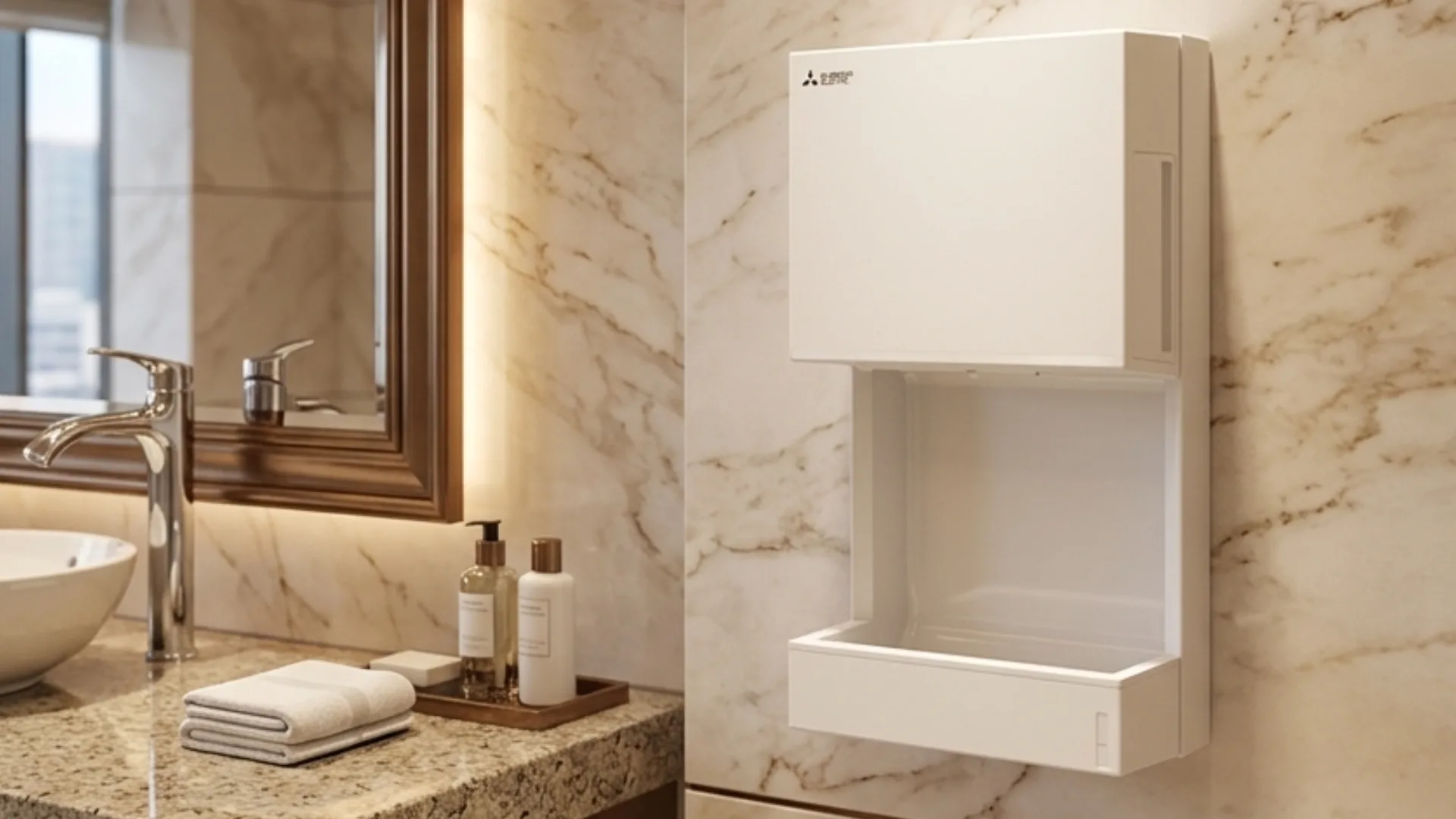
Walk into any high-traffic washroom in Kuala Lumpur a shopping mall, an airport terminal, or a corporate office and you’ll notice one thing immediately: the quality of the hand dryer defines the overall washroom experience. A slow, noisy unit leaves users wiping their hands on their trousers. A fast, hygienic one earns quiet approval and keeps the space cleaner.
Choosing the right hand dryer is no longer a simple procurement decision. It involves balancing drying speed, energy consumption, noise levels, hygiene standards, and long-term maintenance costs. For facility managers and interior designers across Malaysia, this choice directly impacts both operational budgets and user satisfaction.
In this guide, you’ll learn exactly what to look for when selecting a hand dryer from motor performance to installation requirements so you can make a confident, informed decision. If you’re already considering a premium option, explore the Mitsubishi Jet Towel range here to see what a high-performance unit looks like in practice.
What Makes a Powerful Hand Dryer Truly Powerful?
The term “powerful” in hand dryers doesn’t just mean loud or fast. A genuinely powerful hand dryer delivers high-velocity airflow, efficient motor performance, and consistent drying, all within a short cycle time.
Airflow Velocity and Drying Time
The most critical metric is the air speed (measured in m/s or km/h). High-speed jet hand dryers typically operate at 100–400 km/h of airflow, which physically scrapes water off the hands rather than evaporating it slowly with heat. This is why models like the Mitsubishi Jet Towel can dry hands in as little as 7–10 seconds, a significant advantage in high-footfall environments.
Key performance factors to compare:
- Drying time: Target under 12 seconds for commercial-grade facilities
- Motor type: Brushless DC motors offer longer lifespans and quieter operation
- Airflow design: Slot-type nozzles provide more targeted drying than round-hole diffusers
- Wattage: Higher wattage (1,000W–1,800W) generally means faster drying, but efficiency matters more than raw power
Heat vs. No-Heat Technology
Traditional hand dryers use heated air to accelerate evaporation. Modern jet-type dryers rely on high-speed unheated or mildly-heated air. In Malaysia’s humid tropical climate, no-heat or low-heat models are often more energy-efficient and still dry effectively because ambient temperatures are already warm.
Powerful Hand Dryer & Energy Efficiency: Monthly Cost Impact
In Malaysia, electricity tariffs for commercial premises fall under the Tenaga Nasional Berhad (TNB) commercial rate structure. A hand dryer running 200 cycles per day in a busy mall washroom adds up and the difference between an inefficient unit and an energy-rated one can amount to thousands of ringgit annually.
Energy Consumption
| Type | Average Wattage | Drying Time | Cost Efficiency |
| Traditional warm-air dryer | 2,000–2,500W | 30–45 sec | Low |
| High-speed jet dryer | 550–1,600W | 7–12 sec | High |
| Eco-rated jet dryer | 500–900W | 10–14 sec | Very High |
High-speed units consume less energy per dry cycle despite their higher wattage, simply because the cycle completes much faster. Over a 5-year lifespan, the energy savings from switching to a quality jet hand dryer can offset the initial investment significantly.
When evaluating options like the Mitsubishi hand dryer Malaysia series, look for units with an eco-mode or auto power-down feature, which reduces wattage when airflow is sufficient.
Hygiene Standards: Why Your Powerful Hand Dryer Matters
Post-pandemic washroom hygiene has become a focal point for property managers, especially in food and beverage outlets, healthcare facilities, and hospitality venues. A hand dryer that harbours bacteria or spreads airborne particles defeats the purpose of handwashing entirely.
What to Look for in Hygienic Hand Dryers
HEPA Filtration Premium hand dryers include HEPA filters that capture 99.97% of airborne particles before blowing air onto freshly washed hands. This is particularly important in healthcare or food-processing environments where cross-contamination is a risk.
Touchless Operation Infrared sensor activation eliminates contact with surfaces, reducing the spread of germs. All modern powerful hand dryers should be fully automatic if a unit requires button-pressing, it’s already behind the curve.
Antimicrobial Housing Some manufacturers coat interior components with silver ion or antimicrobial agents to inhibit bacterial growth within the unit itself. Check product specifications carefully.
Drip tray or internal drainage Units with a built-in water collection tray prevent dripping water from pooling on the floor a common complaint in Malaysian washrooms where usage is continuous throughout the day.
Noise Levels and User Experience
A powerful hand dryer needn’t be an ear-splitting one. Noise is measured in decibels (dB), and anything above 80dB becomes uncomfortable in enclosed washroom spaces. High-quality jet dryers achieve fast drying at 58–75dB through optimised airflow engineering proof that performance and comfort can coexist.
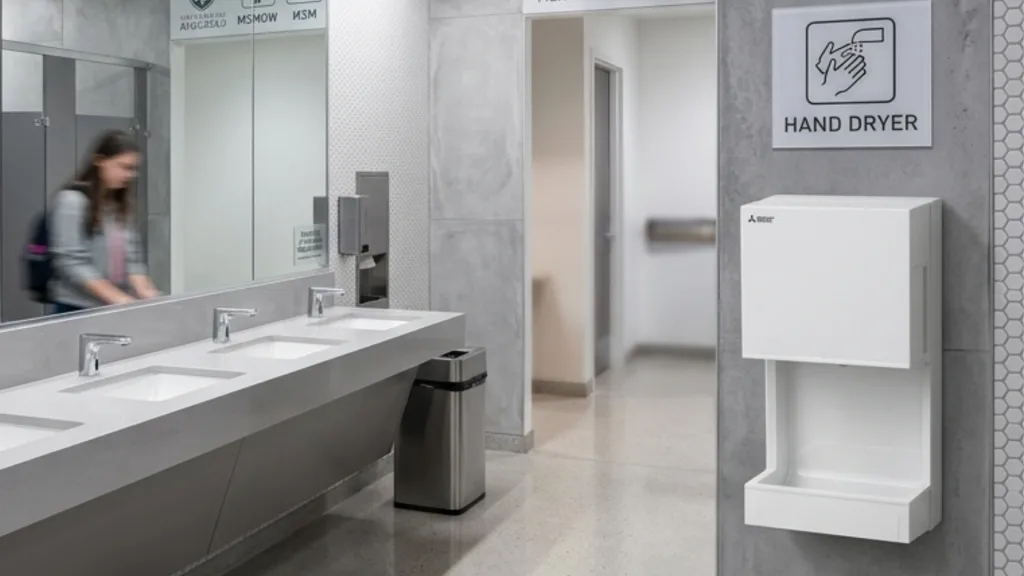
Installation & Maintenance of a Powerful Hand Dryer
Choosing the right unit is only half the equation. Installation requirements, maintenance schedules, and local service support are equally important especially for large-scale deployments across multiple washroom blocks.
Installation Considerations
- Wall thickness and mounting depth: Recessed models save space but require adequate wall depth (typically 100–150mm). Surface-mounted units are easier to retrofit.
- Electrical supply: Confirm the unit matches Malaysia’s standard 240V/50Hz supply. Most commercial-grade dryers do, but always verify.
- Waterproof rating: For outdoor or semi-outdoor washrooms, look for IP ratings of at least IP24 or higher.
- ADA / OKU compliance: For accessible washrooms, installation height and reach requirements must meet local accessibility guidelines.
Maintenance and Serviceability
The best hand dryer is one that keeps working reliably for years. When evaluating brands, ask:
- Is there a local authorised service centre in Malaysia?
- Are spare parts (filters, motors, nozzles) available locally?
- What is the manufacturer’s warranty period and does it cover parts and labour?
Brands with established distributor networks in Malaysia such as those offering the Mitsubishi Jet Towel series through authorised local partners provide a significant advantage when it comes to after-sales support, servicing, and genuine replacement parts.
Which Powerful Hand Dryer Fits Your Facility?
Not every washroom has the same requirements. A café in Bangsar has different needs from an international airport terminal or a hospital in Putrajaya. Here’s a practical breakdown:
By Facility Type
High-Traffic Public Washrooms (Malls, Airports, Stadiums)
Prioritise drying speed, durability, and low maintenance. Jet-type dryers with brushless motors and HEPA filtration are the gold standard. Units that handle 500+ cycles per day without degraded performance are essential.
Corporate Offices and Hotels
Aesthetics matter alongside performance. Slim, recessed designs with low noise output complement premium interiors. Consider units with colour or finish options to match washroom décor.
Healthcare and F&B Facilities
Hygiene is the primary driver. Mandatory HEPA filtration, antimicrobial surfaces, and touchless operation are non-negotiable. Avoid units that recirculate unfiltered air.
Budget-Conscious SME Premises
Surface-mounted mid-range jet dryers offer a balance of cost and performance. Look for models with at least 10-second drying time and a minimum 2-year warranty.
Quick Selection Checklist
Before finalising your purchase, run through this checklist:
- Drying time under 12 seconds
- Wattage appropriate for your electricity budget
- Touchless infrared sensor activation
- HEPA filter (if hygiene-critical environment)
- Noise level below 75dB
- IP rating suitable for the installation environment
- Local warranty and service support confirmed
- Compliance with accessibility requirements (if applicable)
Conclusion
Selecting a powerful hand dryer is a decision that ripples through your facility’s daily operations from energy bills and maintenance scheduling to user satisfaction and hygiene compliance. The right unit dries hands quickly, operates quietly, consumes energy efficiently, and holds up reliably through thousands of daily cycles.
For Malaysian facility managers, the stakes are real: tropical humidity, high footfall in public spaces, and rising expectations for washroom quality all demand a product that’s built for performance, not just appearances.
Start with your facility’s specific needs traffic volume, hygiene requirements, available space, and budget then match those requirements against proven, commercially rated options. Don’t compromise on filtration if your environment is hygiene-sensitive, and always confirm local after-sales support before committing.
To explore one of the most trusted high-speed hand dryer options available in Malaysia, visit the Mitsubishi Jet Towel product page for full specifications and model comparisons. For a broader range of facility and building solutions, browse the complete Eumation product catalogue or learn more about the team behind the brand.