
Tension gas springs offer space-saving solutions
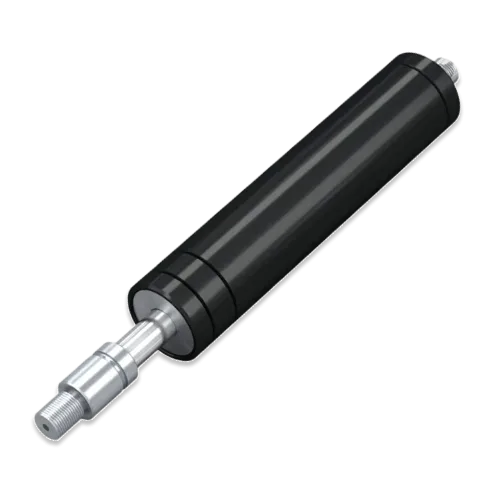
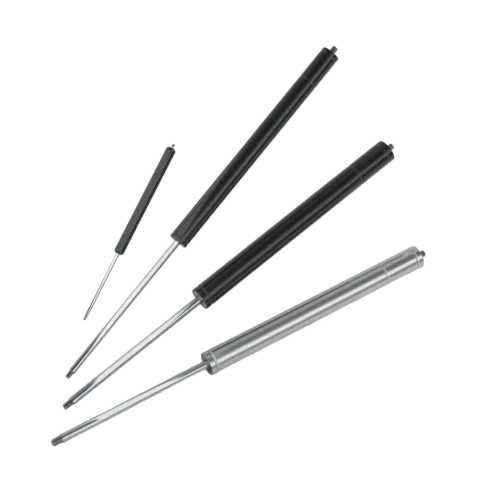
Gas tension springs can be used wherever a normal tension gas spring cannot due to space constraints. Tension springs provide optimal support, particularly in confined spaces or special application areas – such as, for example, in elevator exit hatches or desks with hinged work surfaces. They allow for the power-assisted opening of hatches that have to be pulled upwards.
Functional principle
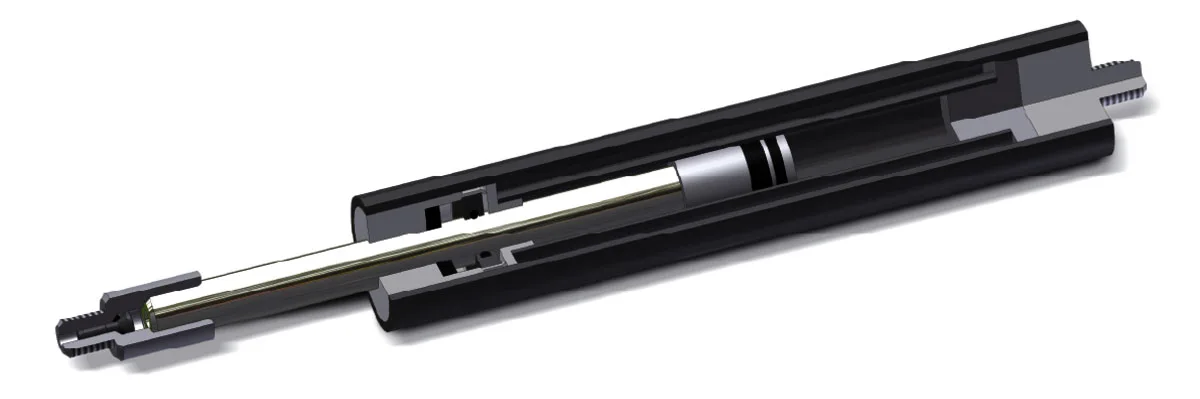
The tension gas spring is a low-maintenance system consisting of a pressure tube, a piston rod, and a piston. It is filled with compressed nitrogen, which creates the spring force. There is a seal on the piston rod guide that minimizes gas loss. Tension gas springs also have an atmospheric bore that allows a connection between the environment and the interior of the tension spring to compensate for pressure differences. They work in accordance with the reverse functional principle of gas pressure springs: The gas pressure in the cylinder pulls the piston rod inward. When closing a hatch, the tension spring supports the hand force.
When unloaded, the piston rod of a tension gas spring is always retracted. When the piston rod is pulled out, the volume in the cylinder decreases and the gas is compressed. This increases the force (progression), the extent of which depends on the diameter of the piston rod and the volume of the cylinder. The standard tension gas springs from HAHN are undamped and do not have a nozzle bore. An exception is the ZD special tension spring, which is equipped with a small opening (nozzle) in the piston. This nozzle bore allows the gas to flow through and ensures a defined extension speed of the piston rod. The cross-section (diameter) of this opening determines the degree of damping for this particular spring.
Reviews
There are no reviews yet.